
Time Is Out Of Joint
And I lack the skills to put it right.

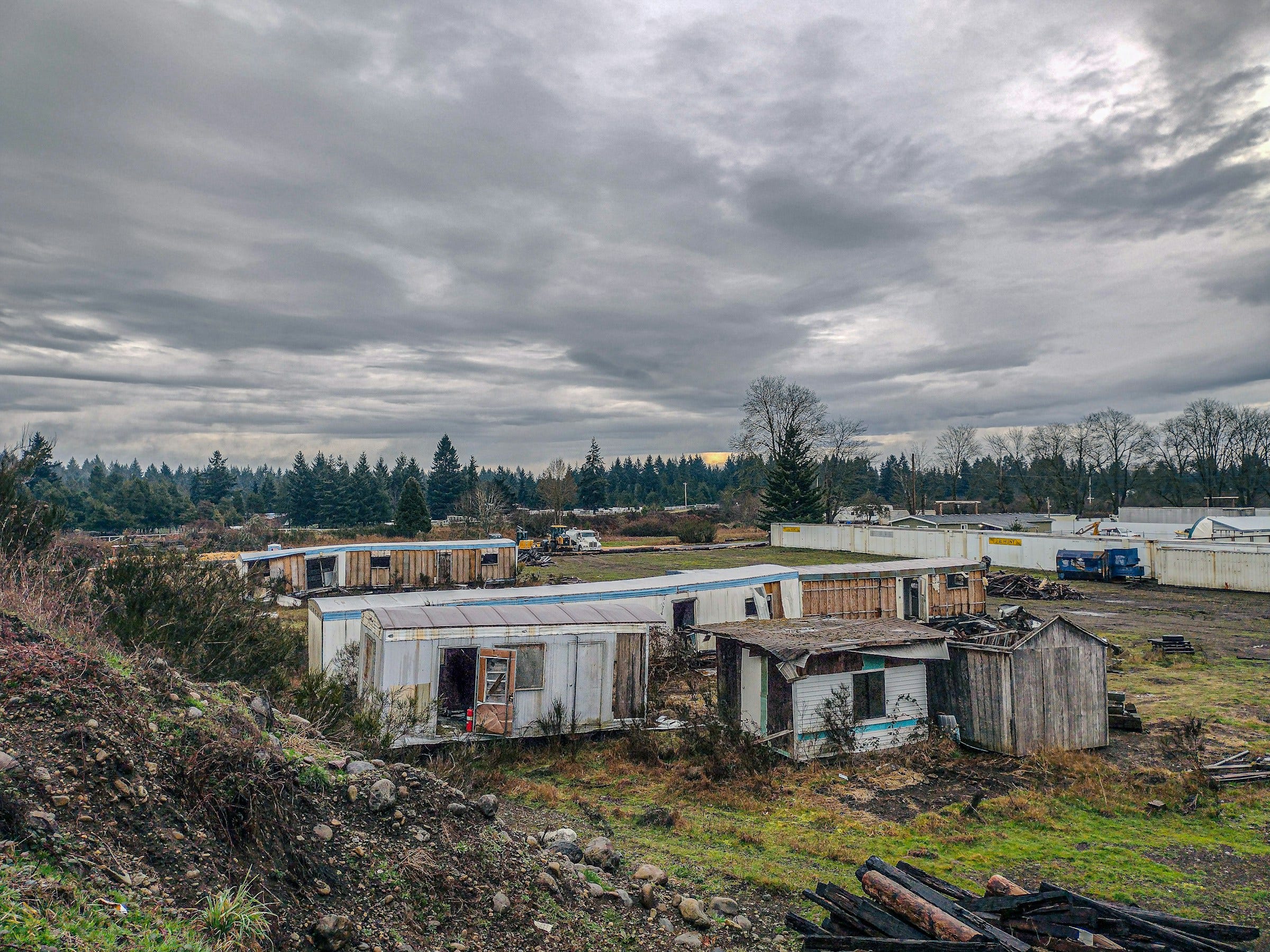
Photo by Peter Robbins on Unsplash
You and I, we were captured
We took our souls and we flew away
We were right, we were giving
That's how we kept what we gave away
Oh, this old world keeps spinnin' 'round
It's a wonder, tall trees ain't layin' down
There comes a time
from “Comes a Time”
Neil Young
COMES A TIME (1978)
”It’s not so easy writing about nothing.”
Patti Smith
M Train, page 3
Voice - or voices, I’m really not certain how to describe the sound - spoke: “You will have to come back here many, many times to accomplish your work.” This revelation struck me through my center like a spike, a stake of disappointment fastening me to a world, a time, a place I desperately hoped to leave at the end. Why can I not go on to The World To Come…? or to be even less mysterious in my language: My hope was to go home after all this. That I would be allowed to go home. Not here, in this world — I’ve had no home here, really. Waystations, respites, refuges yes, but with the understanding in the back of my mind that at any moment, eventually, it could all be lost, what moments of peace and relative stability there are in this world are just and only that: moments. Impermanent and passing moments to be thankful for, yet never attached to. Attaching oneself deeply to the passing things and people is to voluntarily ask for unnecessary mutilations to one’s soul, one’s very core, “that sacred coal that burns inside of me,”1 as the song says.
I’ve always misheard that line as “sacred core,” so sometimes misquote it that way — it’s meaningful to me either way.
Fire, light contained within the bare existence of a person such as I am is not something one can or should afford to shed recklessly hither and yon. It is for sharing with great intention, for passing on to those who will or may receive it whether they understand what they receive at the moment or not. It was shared with me that I might kindle it, guard it, add to it if possible, and then hand it on to those whose hands reach out when they see it and express some sort of need, in words or glances or because of the circumstance within which I find them.
All the people I become attached to, even love, form friendships with, even intimacy, will pass and go eventually; sooner than later most have their own lives and those paths lead elsewhere. Death will take and has taken some away. Though I shared something of myself with them, their leaving is no mutilation, no mangling, though the loss is felt. Sometimes keenly because I know I will not see those people again, never hear from them, and the memory of me will never trouble their minds. Other matters will occupy that space in them, valuable, productive, even hopeful matters will concern them. Some spark of fire I shared may help them on that path through the dark places. That was my work and my role for them.
That is good enough. They were on loan to me for a time and I return them to the Giver thankful for their presence and the time we shared.
My path often leads away from these people who have some need of me for a moment in a time and place that is passing. Wherever I am is not quite home in any permanent sense. Eventually, at any time, I, too, will be taken by death for any or no discernable reason.
This world is where I am meant to be, yes, and I do not consider this world a mistake or a punishment or, in itself, a “great vast veil of tears,”2 a misery — I am no “Gnostic” in that sense.
This world is good. Look how it gives forth life and sustains it, even in the turmoil and competition; and you understand as well as I do that human life, at least, is an opportunity for many things, many choices, many dreams — some realized, if partially — in the brief moment before we, again become ashes and dust.
After what of me is body returns to and feeds the futility of the ever shifting dirt beneath our feet, though, I hoped something of me, that sacred core, a memory would be allowed to return to its true home near G-d and all others who are in that state. Miraculously, yes, maybe a fairy tale to some, but that part of The World To Come was my hope. I do not live in order to go there; I do not see it as a reward — my work, my responsibilities are to be done here in this world, the world of activity, action. It is a privilege to be here and to take on meaningful burdens, to joyfully carry weight and build for a future where I will not live for people I will never know and they will never know me.
This world is good. However, it is not good enough. Much is in disrepair, many lack what others can give by sharing, by building, by recognizing the inherent value in every human being and offering help in whatever way one is called.
I do not need a medal, nor a famous name, nor a paradise that is a reward for being “pure and holy” — certainly not one granted for hating the same world G-d created, abandoning it, and refusing to do the labor G-d sent us to perform. That belief seems antithetical to the entire point of human life having developed here.
Apparently, G-d decided to need us, to need us to freely choose to repair the world, to tend and perfect it, in whatever way we each can, whether any other people find our given mission strange or abhorrent or not. Being “understood” by others, at least, is not part of my destiny and it’s pointless to pine for that: My task involves understanding others, lighting up the way for them, whatever their way may be. Offering what little guidance I can from my travels in the twilit lands of books and ideas and art and the darker, more obscure, chthonic depths of one’s interior; this is what I have to offer, to give, for any outstretched hand ready to receive what little I have for them.
G-d decided to need us all to help finish creation, to co-create with G-d. That includes me, in my very small role, my “walk on part in the war.”3
Because I have no power to force anyone to receive anything. I have no power to make another aware of their least painful yet most important form of impoverishment and the imperative demand of life: a good, worthwhile, fully human life that requires us to recognize that need in particular, the moral need, building ethical skills and finding true human values to perform. Recognize and then attend to it, perform the life work that consists in attending to that lack, that impoverishment that make each of us who we are — how and how well we attend to that emptiness and how and whether we heal it with truly valuable activities or we just cover it over with things, anger, hatred; whether we constantly try to fill the hole in our middle with adulation, with attention, with power over others.
Or do we kindle the light in there, face the depths, and choose a truly human pursuit that involves an inner exploration as well as an outer one, each mirroring or echoing the other in strange, synchronistic ways now and again. Then we share with one another what has occurred to us in that search, what we have glimpsed that others cannot, and we listen closely to others and take in their perspectives.
That’s the work of living in this world, the world of activity. The blanks are not something I can fill in for anyone else, so I speak abstractly and metaphorically about the pattern, the bare musical score: Each person’s contribution and interpretation within that pattern — a human life — is irreplaceable because unique. No one else can do the work you can, repair the piece of the world you can, complete the incomplete in your way. If you do not do it, no one will. Your part may appear small in this work; but the truth is, I think, all parts of the work are of equal weight and are equally important. A person who will lift the equivalent of a mountain will not be capable of seeing or delicately picking up the grain of salt and sharing it. The grain of salt may save multitudes when placed in the proper formation — we never know or control the outcome of our actions. The one who moved the mountain centuries ago may have allowed erosion to reveal the salt in time for the one who notices and cares for the physically small to arrive.
This is the story I tell myself. I tell that story so I can keep going each day, get up and arrive wherever I am supposed to be and try to do something worth more than any money could ever buy, no matter how devalued by this culture, no matter how archaic seeming or even foolish. Even if my performance appears mediocre due to my own limitations, it is my performance, it is how I do things the best I can at that moment. It may be the right intensity for the work I’m to accomplish for the brief moment I am allowed to perform the duty.
I do not know.
***
At the end of me here, at my finish, I had hopes of finding a home, a permanent and satisfying one, in another state of being. Not the un-being of the grave, not the nothingness of eternal eradication. The state of being nearer to my Creator in peace and light and goodness beyond anything I could deserve. I didn’t want to come back because I cannot or did not finish my work in this life — which is to say, I failed to become myself. To fully approximate who I am supposed to be — to dimly glimpse that pattern and perform the activities which would bring that person into this world for a short while.
In my dream — it was a dream, I suppose — that voice which spoke to me was like a child’s or children speaking softly and in unison. There was no malice in that voice, but no human immaturity, either. I could not see who was talking and it was none of the characters in the dream that preceded the scene. There was a voice and I could hear it.
Alone, I stood in the middle of the street at the bottom of what was called Courthouse Hill when I was young. So I was in my hometown, a place I longed to permanently leave most of my life but wound up living there, stuck after leaving for 8 years to attend universities, returning inadvertently only to be trapped for decades. Having left or fled the place 15 years ago, depending on one’s point of view, I now dream of versions of it sometimes. Irony.
I was at the bottom of Courthouse Hill in the middle of the street where it intersects with the main drag, a curve away from what was once the town’s only stop light and a five minute walk from the tiny downtown Historical Square once one is beyond the stop light. Across the street from where I stood were many trees, very green, as it was in reality back years ago. Peeking through the trees was part of a small yellow house and its front porch, also accurate to my recollection.
But where I was standing, instead of my feet being directly on the old, gray pavement with the tar that oozed up through the cracks a bit each summer, I was standing on a wooden “track” of some sort. It looked like the old bridges out in the county that crossed some creek — thick hardwood gone an even darker grey with age and oil stains than the pavement. The wood was even cracked, broken, worn like those old bridges, crossbeams beneath tightly horizontal, but two wide tracks to support the weight of big trucks on top of the crossbeams — a thick layer atop the crossbeams, like ruts in a rode except elevated and squared off instead of indented into dirt.
This wooden “bridge road” sat directly on top of the grey pavement. And I stood on one side of the tracks looking down at the wood and then up the road, as if I might cross to the sidewalk on the other side. At that moment in the dream, I marveled at the construction of the superfluous wooden structure (that never existed there in waking reality at any time); but it being out of place didn’t occur to me at all — it was very interesting, the old, twisted grain, the splits and cracks from wear, age, sun, rain, cold.
While looking across the street, the voice said: “You will have to come back here many, many times to accomplish your work.” Gentle, quietly, the voice simply stated what would have to happen — if I chose to keep trying to accomplish “my work.” To become who I am by doing what only I can do.
I woke up and watched the shadows of leaves and the sunlight play on the window across from our bed. Words kept running through my mind along with the image of the street, the wood, the porch of the old yellow house obscured by leaves across the road.
After some time, my eyes watered up. I cried. Not in a long time have I cried — been miserable and sad, yes, but cried, no. One had doubts my body contained enough water to create tears it’s so hot here even inside the house. Air conditioners have to be set very high to keep from burning up from constant, pointless labor. Unrelenting heat, hotter every week. Sirius has risen well over the horizon now, the dog is having his day and we are all malignantly stricken, as the Hellenes used to believe. If the air conditioners had an interior life, one imagines they might cry as well due to their Sisyphean fates.
“You will have to come back here many, many times to accomplish your work.”
Will I have to be reborn many, many times into this world, reborn as more people? — because I, this version of me, won’t be back again in this world, I presume. That concerns me for the reasons I initially discussed, so I cried, broken hearted.
Or does “back here” mean back to my home town, where I do not want to go again, much less “many, many times” and, I’ll hazard a guess, most folks back there who know my name don’t want me back, either: “No, not one.”4
Or perhaps it means there is something about the spirit of the place, the spirit of it that wounded me deeply: the oppressive, confusingly irrational, anti-reasoning, un-creative, utilitarian, and materialistic attitudes and aspects that ripped me up when I was a child. A child born with desires and needs that place and most people of it had no understanding, much less use, for. Hard experiences, bad memories. Lingering terror. Maybe I have to revisit and face that in order to accomplish my work, face it more thoroughly than I’ve tried over the years. Face my broken heart where that place and my memories of it are concerned. Face where and why the values of the place and the values I came to believe in stop overlapping and diverge, often drastically.
Somewhere in that darkness, in the gap of that divergence in values, perhaps there is light to be freed, rescued. Or asking to rescue me. Waiting for me to accept it, hard and harsh as it may be. To bear it away, to share it?
Today, I do not know.
17 August 2024
Richard Van Ingram
Gershom
<iframe width="560" height="315" src="
title="YouTube video player" frameborder="0" allow="accelerometer; autoplay; clipboard-write; encrypted-media; gyroscope; picture-in-picture; web-share" referrerpolicy="strict-origin-when-cross-origin" allowfullscreen></iframe>
“Mama dear, your boy is here, far across the sea
Waiting for that sacred coal that burns inside of me
And I feel a storm all wet and warm not ten miles away
Approaching my Mexican home”
from the chorus of “My Mexican Home”
John Prine
SWEET REVENGE (1973)
“Why dost thou pass away and leave our state,
This dim vast vale of tears, vacant and desolate?'“
Percy Bysshe Shelly
from “Hymn to Intellectual Beauty” (1816)
“Did they get you to trade your heroes for ghosts?
Hot ashes for trees? Hot air for a cool breeze?
Cold comfort for change? Did you exchange
A walk-on part in the war for a lead role in a cage?”
from “Wish You were Here”
Pink Floyd (Roger Waters and David Gilmour, writers)
WISH YOU WERE HERE (1975)
"There is none righteous, no, not one: There is none that understandeth, There is none that seeketh after God. They are all gone out of the way, they are together become unprofitable; There is none that doeth good, no, not one." Romans 3:10, King James Version. Christian New Testament.
[No, I do not believe this myself. I’ve just heard that verse and language yelled at me so many times back in my hometown, I associate the one with the other and quote fragments of it as dark humor sometimes. I’m letting you in on a private joke between myself and myself.]